 Image scaled to 55%
When an interviewer asks,
“What would you do in a situation where you discovered you made a mistake that no one else has noticed yet?”
They aim to assess several key qualities:
- Integrity: Are you honest and willing to admit your mistakes?
- Responsibility: Do you take accountability for your actions?
- Problem-Solving Skills: How effectively can you address and correct mistakes?
- Proactiveness: Do you take the initiative to resolve issues before they escalate?
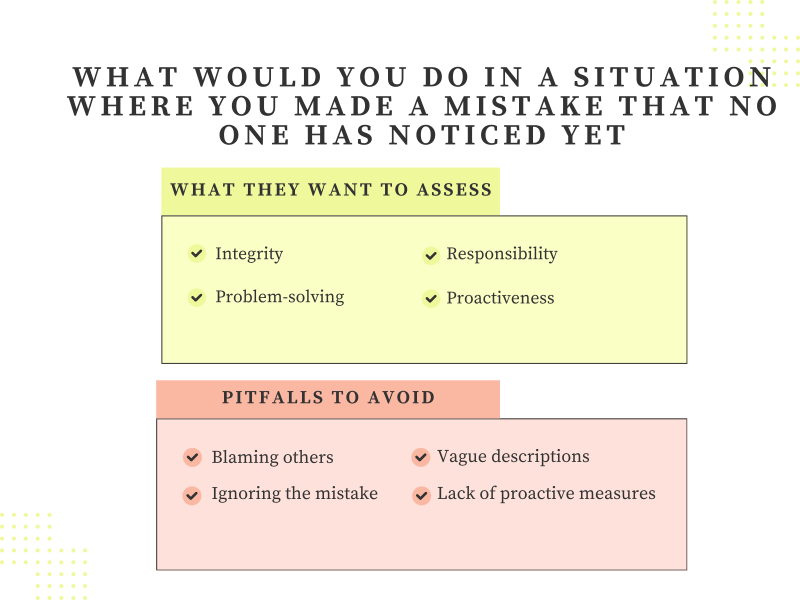 Image scaled to 85%
Structuring Response Using the STAR Method
Question:
“What would you do in a situation where you discovered you made a mistake that no one else has noticed yet?”
Answer:
Situation: “In my previous role as a project manager at XYZ, I was responsible for overseeing a critical software deployment. After the deployment, I realized that I had overlooked a configuration error that could potentially disrupt the service for a small subset of users.”
Task: “My task was to ensure that our software deployment was smooth and error-free. Despite the error being unnoticed by others, I needed to address it immediately to prevent any potential disruption.”
Action: “As soon as I discovered the mistake, I took the following steps:
- Assessment: I assessed the potential impact of the configuration error to understand its severity and which users could be affected.
- Notification: I immediately informed my direct supervisor about the mistake and my plan to fix it. This ensured transparency and allowed for any additional input or oversight.
- Correction: I quickly corrected the configuration error and deployed the fix. I then conducted thorough testing to ensure that the issue was resolved and no new problems were introduced.
- Documentation: After resolving the issue, I documented the error and the steps taken to fix it. I also updated our deployment checklist to include additional verification steps to prevent similar errors in the future.”
Result: “The issue was resolved without any user impact, and my supervisor appreciated my honesty and quick action. By addressing the mistake proactively, I maintained the trust of my team and ensured the continued reliability of our service. This experience reinforced the importance of taking responsibility and being transparent about mistakes.”
Pitfalls To Avoid
-
Ignoring the Mistake: Avoid implying that you would ignore the mistake because no one else noticed. This shows a lack of integrity and responsibility.
-
Blaming Others: Don’t shift the blame to external factors or other team members. Take full responsibility for your actions.
-
Vague Descriptions: Provide clear and specific details about how you would handle the situation. Vague responses do not effectively demonstrate your problem-solving skills.
-
Lack of Proactive Measures: Failing to mention how you would prevent similar mistakes in the future can make it seem like you are not committed to continuous improvement.