 Image scaled to 55%
When an interviewer asks,
“Describe a time when you had to explain a complex technical concept to a non-technical audience,”
They are looking to assess several important skills:
- Communication Skills: Can you simplify complex ideas and make them understandable to someone without a technical background?
- Empathy and Patience: Do you show understanding and patience when explaining something complicated?
- Adaptability: Are you able to adjust your communication style based on your audience?
- Teaching Ability: Can you educate others effectively, ensuring they grasp the key points?
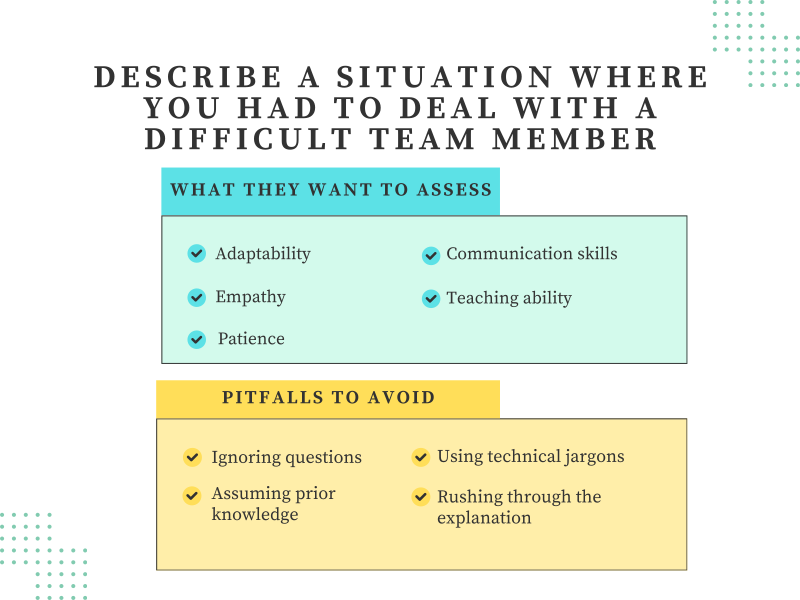 Image scaled to 85%
Structuring Response Using the STAR Method
Question:
“Describe a time when you had to explain a complex technical concept to a non-technical audience.”
Answer:
Situation: “Last year, our company introduced a new data analytics tool. The marketing team needed to understand how to use this tool to track their campaign performance, but they had no technical background.”
Task: “My task was to explain how the analytics tool worked and how they could use it to gather the data they needed without overwhelming them with technical jargon.”
Action: “I organized a training session for the marketing team. I started by using simple analogies to explain the basic concepts. For example, I compared data filtering to sifting through sand to find specific grains, which helped them understand the process more easily. I then created a step-by-step guide with screenshots, walking them through each function of the tool. During the session, I encouraged them to ask questions and provided hands-on demonstrations. I also checked in with each team member individually to ensure they were comfortable using the tool.”
Result: “By the end of the training, the marketing team felt confident in using the analytics tool. They were able to track their campaigns effectively, which led to a 20% improvement in their performance metrics. The feedback from the team was very positive, and they appreciated the clear and simple explanations.”
Pitfalls To Avoid
-
Using Technical Jargon: Avoid using technical terms that the audience may not understand. Instead, use simple language and relatable analogies.
-
Rushing Through the Explanation: Don’t rush through your explanation. Take the time to ensure everyone understands each step before moving on.
-
Assuming Prior Knowledge: Don’t assume the audience has any background knowledge. Start from the basics and build up their understanding.
-
Ignoring Questions: Make sure to encourage questions and address any confusion immediately. This ensures everyone is on the same page.